
State law bans food scraps from the trash
Food scraps are:
- Parts of food items that are typically discarded rather than eaten: peels, rinds, cores, eggshells, seeds, pits, bones, coffee grounds and paper filters, loose-leaf tea & paper tea bags, and fats/oils/grease.
- Food that was not finished: “plate scraps” or leftovers that went bad. Any type of food can become scraps–bread, pasta, soup, veggies, fruit, sauces, meat, dairy, sweets, etc.
- These items can go in your food scrap collection container. You may be able to put other items in with your food scraps depending where your scraps end up. Read on to learn more
What do I have to do? If it was once part of something alive, like a plant or animal, it does not belong in the landfill. Food scraps and yard debris (leaves, grass, brush clippings, etc.) will need to be managed separately from trash.
The first step is to collect your food scraps in a container. There’s no right way to do this. You can reuse a large yogurt tub or bucket, buy a food scrap container, or keep a plastic bag in the freezer–find a method that works for you based on how much food scraps you generate, how often you want to empty and wash your container, etc. You’ll empty your container regularly into a backyard bin if you compost in your yard, hire a hauler to empty your food scrap tote or bucket if you subscribe to a pick-up, or dump your scraps into a food scrap cart at the Gleason Road transfer station or town transfer stations. 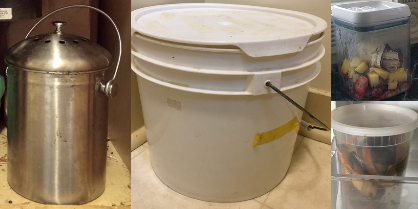
Why separate food scraps from the trash? Food scraps and yard debris make up ~30% of a typical Vermont family’s waste; at restaurants and cafeterias, food scraps can be over half the waste. Keeping these materials out of the landfill has a big impact:
- When it is trapped in a landfill, food waste decomposes slowly, and without oxygen. This process produces methane, which is a greenhouse gas 84 times more powerful than CO2 over a 20-year period.
- Food scraps contain valuable nutrients that are good for the soil. Finished compost can be used in gardens, farms, and landscaping.
- Generating less trash conserves landfill space.
- Composting puts your waste to work supporting composters, local farmers, and food scrap haulers.
- Without food scraps in it, garbage is cleaner and less smelly.
If you prefer, permit holders may conveniently dispose of their food waste at the Gleason Road transfer station for a small fee. (click here) to find out what is accepted and what is NOT accepted.
In This Section
- Compost Bins & Containers
- Feeding Food Scraps to Chickens and Pigs
- Food Donation in Rutland County
- Food Scrap Collection
Frequently Asked Questions
Can’t I just put scraps down my garbage disposal?
No. Food scraps, fats, oils, and grease should never go down the drain because they can cause clogs, back up sewer and septic lines, require additional energy for processing and removal, and increase operating and repair costs. Kitchen sink garbage disposals don’t help. Sewers, septic systems, and wastewater treatment facilities in Rutland County are not designed to handle anything other than human waste and toilet paper. Learn more about what can and can’t go down the drain by clicking on the attachment below.
What about meat and bones?
Town transfer station and Gleason Transfer Station accept all food scraps, including meat, bones, fish, dairy products, fats, and oils. Large amounts of used cooking oil are also accepted at the District Transfer Station.
If you decide to compost at home, leave meat and bones out of your compost because it can attract wildlife. Home composters are allowed to put meat and bone scraps into the trash after July 1, 2020. Alternatively, bring your meat scraps to a town drop-off or the District Transfer Station, use a Green Cone solar digester, or bury bones at least 18 inches deep in your yard or garden.
What are my options for managing food scraps?
Your first step should be to reduce wasted food as much as possible to save money and minimize the amount of scraps you have to handle. Your options for the remaining scraps include:
- Feeding animals
- Composting at home
- Using a Green Cone solar digester
- Dropping off food scraps at the District Transfer Station or your town drop-off
- Requesting curbside collection service from a hauler that collects food scraps
Check out our tips for collecting food scraps and learn what is accepted at drop-off locations.
When do I have to start separating food scraps from my trash?
Separating food scraps from the trash is required for everyone in Vermont starting July 1, 2020. People or entities that generate at least 18 tons of food waste per year (1/3 ton per week) are already required to divert food scraps to any certified facility within 20 miles.
Will it cost me?
The best way to manage food waste in a cost-effective way is to reduce waste to begin with. District residents can bring food scraps to their town transfer station or our Transfer Station at Gleason Road for a minimal fee. Curbside haulers and town drop-offs may charge for the service of collecting food scraps. If you compost at home, you could save money by reducing the weight and volume of your trash. Without food in your trash, you may be able to cut down on your trips to the drop-off, or request less frequent curbside pickup.